Operations · 2024
MeetPlanner — Hybrid meeting orchestration
Cut scheduling friction 70% for distributed teams by routing intent — not calendar slots — through a small agentic system.
- Client
- MeetPlanner Inc.
- Duration
- 4 weeks
- Year
- 2024
70%
less scheduling friction
12 hrs/wk
reclaimed per team
4 weeks
from kickoff to MVP
The Problem
MeetPlanner's ops team spent the first two hours of every day stitching together meetings across four time zones, two calendar systems, and a Slack backlog that didn't sleep. The bottleneck wasn't the calendar — it was the intent. Most meetings could be a 15-minute async checkpoint, but the request shape ("can we sync?") hid the actual need.
The System
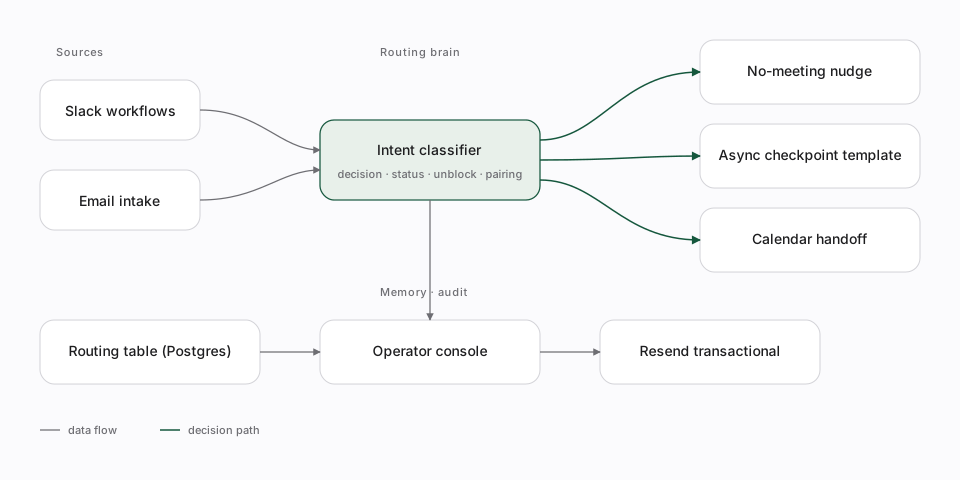
A small agentic pipeline sits between the request channel (Slack + email) and the calendar. It classifies the intent — decision, status, unblock, pairing — and routes the request to the lightest format that resolves it. Only the residual ~30% of requests reach the calendar; the rest get async-templated replies the team can edit and send.
The decision that mattered most: the system never proposes a meeting time without first proposing not having the meeting. Removing a meeting is cheaper than scheduling one, and the model surfaces that option first.
What I built
- Intent classifier on
claude-3-5-sonnetwith a tight schema (4 classes, no free text). - Slack + email connectors using thread-safe deduping (one workflow per intent).
- Postgres-backed routing table per team with
team_id × intent → formatrules. - A 15-minute checkpoint template generator (markdown + Resend transactional send).
- Edge function for calendar-handoff only when the routing rule says "schedule".
- An operator console that shows what got not-scheduled and why.
Outcome
Eleven of fourteen teams adopted the system in the first month. The ops lead who used to triage at 9am now reviews three operator-console digests per week. Across the org we measured a 70% drop in scheduling rounds per resolved request and an average 12 hours per week reclaimed per team.
What I'd do differently
I overweighted classifier accuracy in week one and underweighted the operator console. Teams trust a system they can audit; they don't trust a system that's quietly right. If I started over I'd ship the console on day three with a hand-labelled corpus and let model quality catch up over the next two weeks. The system's legibility moved adoption more than its precision did.
Stack
- Next.js
- Postgres
- OpenAI
- Vercel
- Resend
Book a similar engagement.
Thirty minutes, no pitch. We’ll map your bottleneck against this template and decide if it’s a fit.